
All Saints Novena 1
About the Celebration
According to Catholic teaching, there are three states of the Church: the Church
Militant, the Church Penitent, and the
Church Triumphant. We are the Church Militant because we are still living our earthly life and are active in spiritual
warfare on Earth. The Church Penitent are those who are in Purgatory who are being purified so as to be fit for entering
Heaven. The Church Triumphant are those who are already in Heaven. It is this last group that we celebrate on All Saints’
Day and whose intercession we regularly seek in these novenas, because they are the ones who already see God
face-to-face.
The Saints in Heaven are examples to be imitated. They are powerful intercessors, who
pray for us from their place in the Communion of Love in heaven. With the help of their intercession, we ask the Father
to raise up Saints for our own age and to give us the graces we need to continue to grow into the Image and Likeness of
Jesus Christ, our Savior and Lord, so that we can grow in holiness of life and lead all men, women and children back
to the Father, through the Son, by the power of the Holy Spirit.
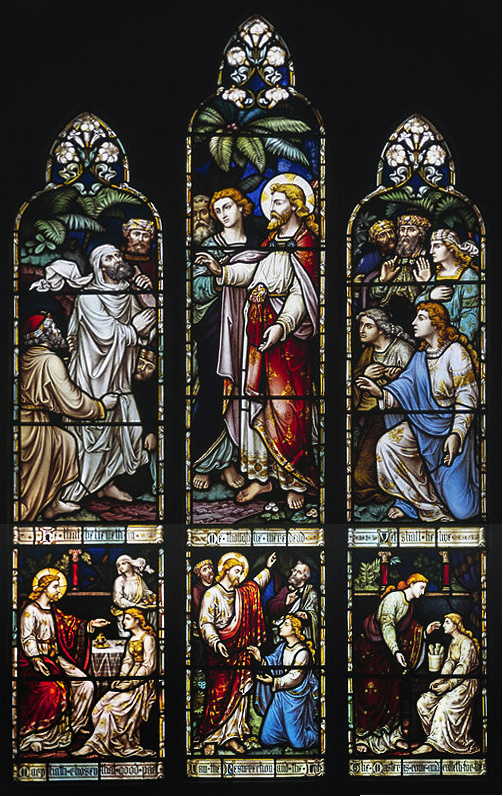
All Saints
Image by: Unknown 2

Adoration
Image by: Unknown 3
History of the Solemnity
Solemnity celebrated on the first of November. It is instituted to honour all the saints, known and unknown, and,
according to Urban IV, to supply any deficiencies in the faithful's celebration of saints' feasts during the
year.
In the early days the Christians were accustomed to solemnize the anniversary of a martyr's death for Christ at
the place of martyrdom. In the fourth century, neighbouring dioceses began to interchange feasts, to transfer
relics, to divide them, and to join in a common feast; as is shown by the invitation of St. Basil of Caesarea to
the bishops of the province of Pontus. Frequently groups of martyrs suffered on the same day, which naturally
led to a joint commemoration. In the persecution of Diocletian the number of martyrs became so great that a
separate day could not be assigned to each. But the Church, feeling that every martyr should be venerated,
appointed a common day for all. The first trace of this we find in Antioch on the Sunday after Pentecost. We
also find mention of a common day in a sermon of St. Ephrem the Syrian, and in the 74th homily of St. John
Chrysostom. At first only martyrs and St. John the Baptist were honoured by a special day. Other saints were
added gradually, and increased in number when a regular process of canonization was established; still, as early
as 411 there is in the Chaldean Calendar a "Commemoratio Confessorum" for the Friday after Easter. In the West
Boniface IV consecrated the Pantheon in Rome to the Blessed Virgin and all the martyrs, ordering an anniversary.
Gregory III consecrated a chapel in the Basilica of St. Peter to all the saints and fixed the
anniversary for 1 November. A basilica of the Apostles already existed in Rome, and its dedication was annually
remembered on 1 May. Gregory IV extended the celebration on 1 November to the entire Church. The vigil
seems to have been held as early as the feast itself. The octave was added by
Sixtus IV.